

How Atmospheric Conditions Create Spectacular Visual Displays
Introduction
Mother Nature has her own palette and canvas. From the dazzling auroras to the picturesque sunsets, our skies are often transformed into breathtaking art exhibits. Have you ever paused to wonder how atmospheric conditions create these spectacular visual displays? Delving into the science behind these phenomena not only enriches our understanding but also enhances our appreciation of these stunning natural spectacles. In this blog post, we’ll explore how different atmospheric elements interact to paint the sky with awe-inspiring colors and patterns.
Exploring the Visual Symphony in the Skies
The Magic of Light and Air: Refraction, Reflection, and Diffraction
Light plays the principal role in the visual displays we observe in the sky. As sunlight travels through the Earth’s atmosphere, it encounters gases, particles, and droplets that alter its path and color. This interaction can occur through refraction, reflection, or diffraction:
- Refraction is the bending of light as it passes through mediums of differing density, like air to water. A classic example of refraction is the formation of a rainbow. Sunlight refracting in raindrops breaks into its component colors, creating a multicolored arc in the sky.
- Reflection contributes to phenomena like sunsets and sunrises. When the sun is low on the horizon, its light hits the atmosphere at an angle and gets scattered. Shorter wavelengths (blues and greens) scatter out, leaving the longer wavelengths (reds and oranges) to paint the sky.
- Diffraction occurs when light bends around small particles, like water droplets, often leading to halos around the sun or moon.
Atmospheric Optics: Mirages and the Green Flash
Beyond the daily sunrise and sunset, certain atmospheric conditions can lead to more unusual visual displays. Mirages, for example, are fascinating optical illusions that occur when layers of air at different temperatures bend light rays. On hot days, the heat radiating off the surface causes the light from the sky to bend upward, creating images of distant objects or the sky itself on the ground. Likewise, the elusive green flash seen just after sunset or before sunrise, is a result of the atmosphere acting as a prism separating the colors of the light.
The Spectacle of Polar Lights: Aurora Borealis and Aurora Australis
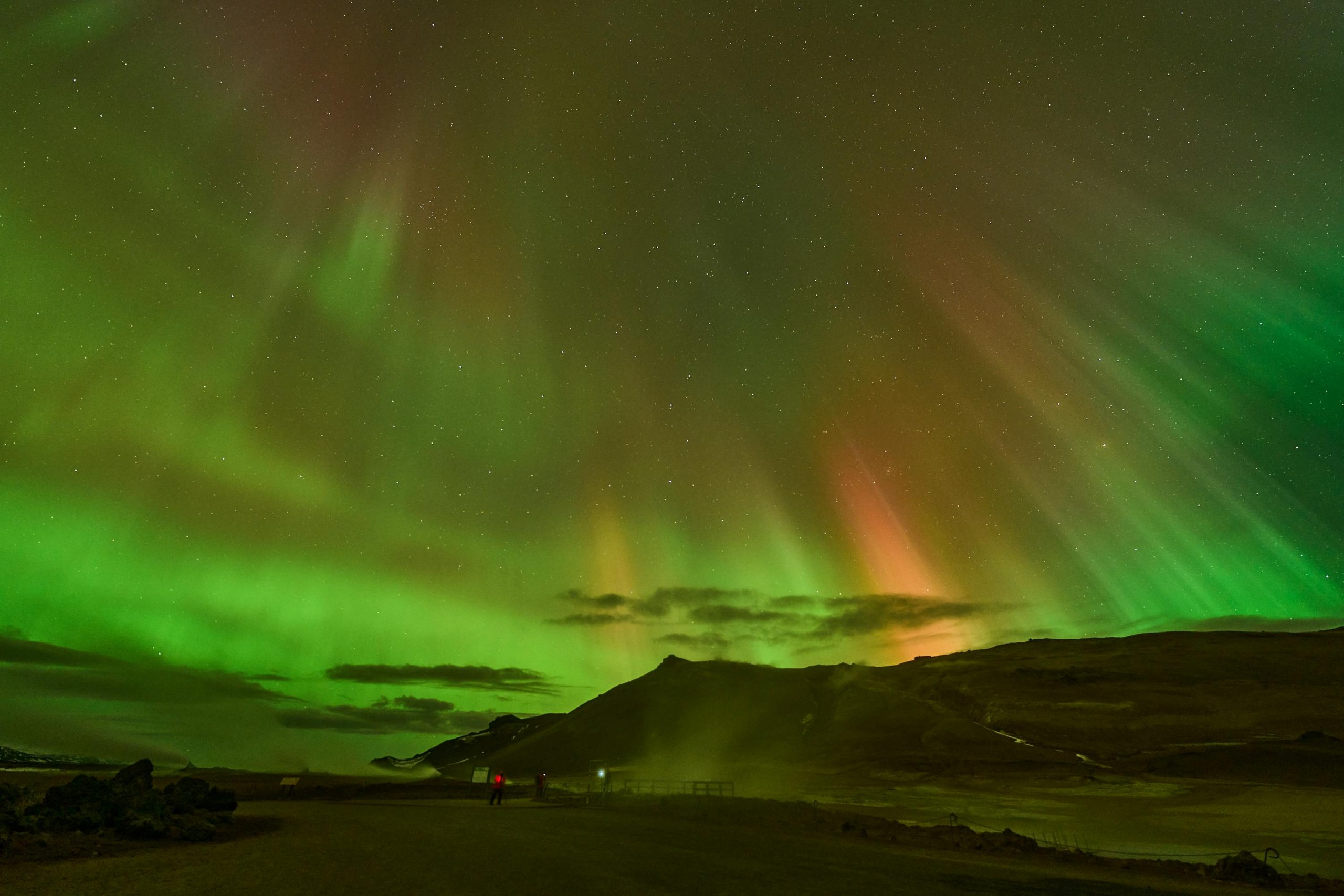
Among the most mesmerizing atmospheric displays are the auroras. These occur near the polar regions and are caused by the interaction between the Earth’s magnetic field and charged particles from the sun. The collisions between these solar particles and atmospheric gases like nitrogen and oxygen create stunning displays of green, pink, red, violet, and blue lights that dance across the sky.
The Phenomenon of Cloud Iridescence
Another less known but equally stunning atmospheric phenomenon is cloud iridescence. This occurs close to the sun when thin clouds containing uniform droplets diffract light. The process creates a beautiful palette of pastel colors, making the cloud appear as though it’s shimmering.
How Light Pollution Affects Our View of These Phenomena
While discussing how atmospheric conditions create spectacular visual displays, it’s essential to touch upon the role of light pollution. Human-made lighting can significantly diminish our ability to view these natural phenomena. Darker skies not only provide a better backdrop for observing auroras and starry nights but are also crucial for the health of our ecosystems.
FAQ: Unraveling Common Queries
What causes the sky to appear blue?
The sky appears blue due to the scattering of sunlight off the molecules of the atmosphere. This scattering, called Rayleigh scattering, is more effective at shorter wavelengths (the blue end of the visible spectrum).
Can atmospheric phenomena predict weather changes?
Yes, certain atmospheric phenomena can indicate impending weather changes. For example, a halo around the sun or moon often suggests that rain or snow will fall within the next 24 hours.
Are atmospheric optical phenomena common worldwide?
While some phenomena like blue skies and rainbows are common worldwide, others like the northern lights or mirages are more location-specific. Auroras typically occur in high-latitude regions around the Arctic and Antarctic.
Conclusion
The link between atmospheric conditions and the spectacular visual displays they create is both fascinating and complex. By understanding the science behind these phenomena, we not only gain insight into the workings of our atmosphere but also develop a deeper appreciation for the natural beauty that surrounds us. Whether it’s the vivid aurora borealis in the polar night or a serene pastel sunset, these natural spectacles remind us of the magic that the natural world holds, urging us to look up and admire.
So next time you behold the sky’s canvas, remember, it’s not just about what you see but how atmospheric conditions orchestrate these breathtaking visual symphonies. Truly, the sky might just be the biggest art gallery in the world, continuously showcasing masterpieces that are as scientifically intriguing as they are visually stunning.