

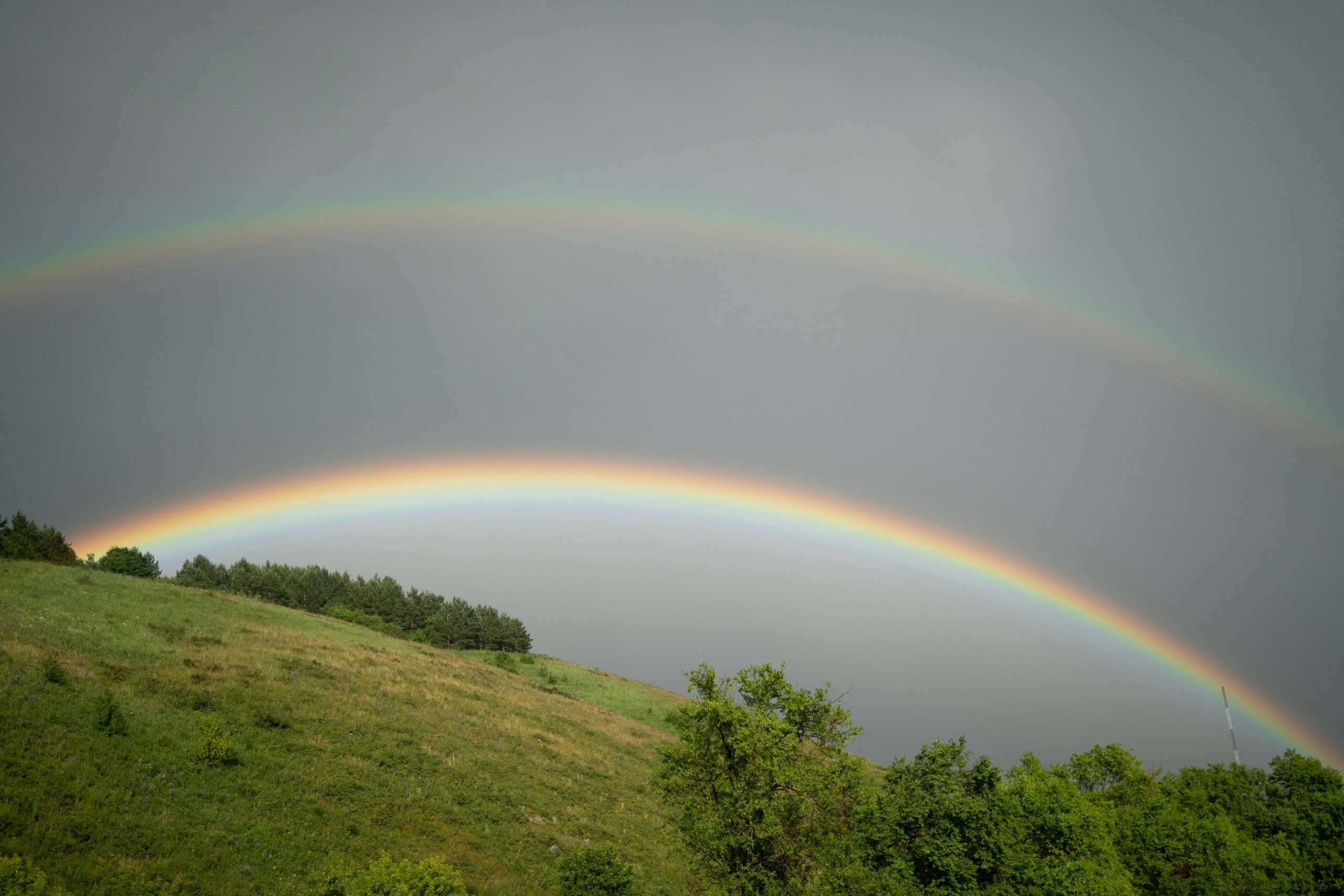
Exploring the Science Behind Rare Double Rainbows: A Journey through Light and Reflection
Have you ever witnessed the magical sight of a double rainbow? While the appearance of a single rainbow is quite common and always an enchanting sight, the occasion of catching a double rainbow is an even rarer and more spectacular phenomenon. In this blog post, we’ll dive into Exploring the Science Behind Rare Double Rainbows, unraveling how these exquisite displays form, what makes them rare, and some frequently asked questions that surround these multicolored arcs.
What Are Double Rainbows?
A double rainbow occurs when two separate arcs are visible in the sky, one outside the other. The inner arc, which is brighter and has colors ranging from red (on the outer edge) to violet (on the inner edge), is known as the primary rainbow. The outer arc, less vivid and displaying colors in reverse order, is called the secondary rainbow.
The Formation of Double Rainbows: A Play of Light and Water Droplets
To appreciate Exploring the Science Behind Rare Double Rainbows, it’s crucial to understand the basics of light refraction, reflection, and dispersion. These are the primary physical processes involved in the formation of rainbows:
-
Refraction: When sunlight enters a raindrop, it slows down and bends as it moves from air to water; this is called refraction. This bending of light depends on the wavelength of the colors, causing them to spread out into a spectrum.
-
Reflection: After refraction, some of the light inside the raindrop hits the back of the droplet and reflects off it. This reflection sends the light back toward the front of the drop and out into the air.
-
Dispersion: As the light exits the droplet, it refractions again, causing further separation of the colors. This process results in the colorful spectrum known as a rainbow.
The primary rainbow forms through a single internal reflection within raindrops. However, a double rainbow occurs when some of the light undergoes two internal reflections within the droplet before exiting. This second reflection causes the formation of the secondary rainbow seen outside the primary arc, creating a wider, less bright rainbow with its color order reversed.
Why Are Double Rainbows Rare?
The rarity of double rainbows arises primarily from the geometrical and physical conditions needed for their formation. After the second reflection within the raindrops, the light exits at a different angle – typically about 50-53 degrees for the secondary rainbow, compared to 40-42 degrees for the primary arc. This subtle difference means the light must strike the droplet precisely, requiring more specific conditions than for a single rainbow.
FAQs: Unveiling More Mysteries of Double Rainbows
Q1: Can there be more than two rainbows at a time?
Yes, although very rare, there are phenomena known as tertiary and quaternary rainbows. These occur when light reflects three or four times within a droplet but are usually very faint and require specific atmospheric conditions to observe.
Q2: Why are the colors of the secondary rainbow reversed?
This inversion occurs because of the second reflection inside the raindrop. Each reflection causes an inversion of the light waves’ entering and exiting sequence, thereby reversing the colors in the secondary rainbow.
Q3: Does the size of the raindrops affect the appearance of a double rainbow?
Indeed, the size of the raindrops can influence the clarity and size of the rainbows. Larger droplets tend to produce brighter and more vivid rainbows, while smaller droplets can make the arcs appear wider and less vibrant.
Q4: Is it possible to predict when a double rainbow will appear?
While predicting the exact occurrence of a double rainbow is challenging, certain conditions can increase the likelihood – such as having the sun behind you and rain in front during late afternoon. A combination of sunshine and rainfall is necessary, hence why double rainbows often occur before or after a storm.
Conclusion: The Enduring Wonder of Double Rainbows
Exploring the Science Behind Rare Double Rainbows enlightens us on these rare phenomena that continue to capture the imagination and awe of onlookers around the world. By understanding the optical and meteorological conditions that give rise to these spectacular visions, we can appreciate and perhaps anticipate our next encounter with this splendid display of natural artistry. The next time you see a double rainbow, remember, you’re witnessing a special dance of light and water, a phenomenon where nature truly puts on a breathtaking show.